Internationally recognized researcher and R&D 100 Award recipient (2024) for pioneering works in ultrasonic photonics and distributed fiber-optic sensing. Completing Ph.D. at University of Pittsburgh with 2 patents filed, 10 conference proceeding papers, and 4 conference presentations including an invited talk. Available to start in Sept. 2025 without sponsorship. Experienced in machine learning for dimensionality reduction, feature extraction, and predictive modeling using tensor decomposition, neural networks, and Bayesian optimization.
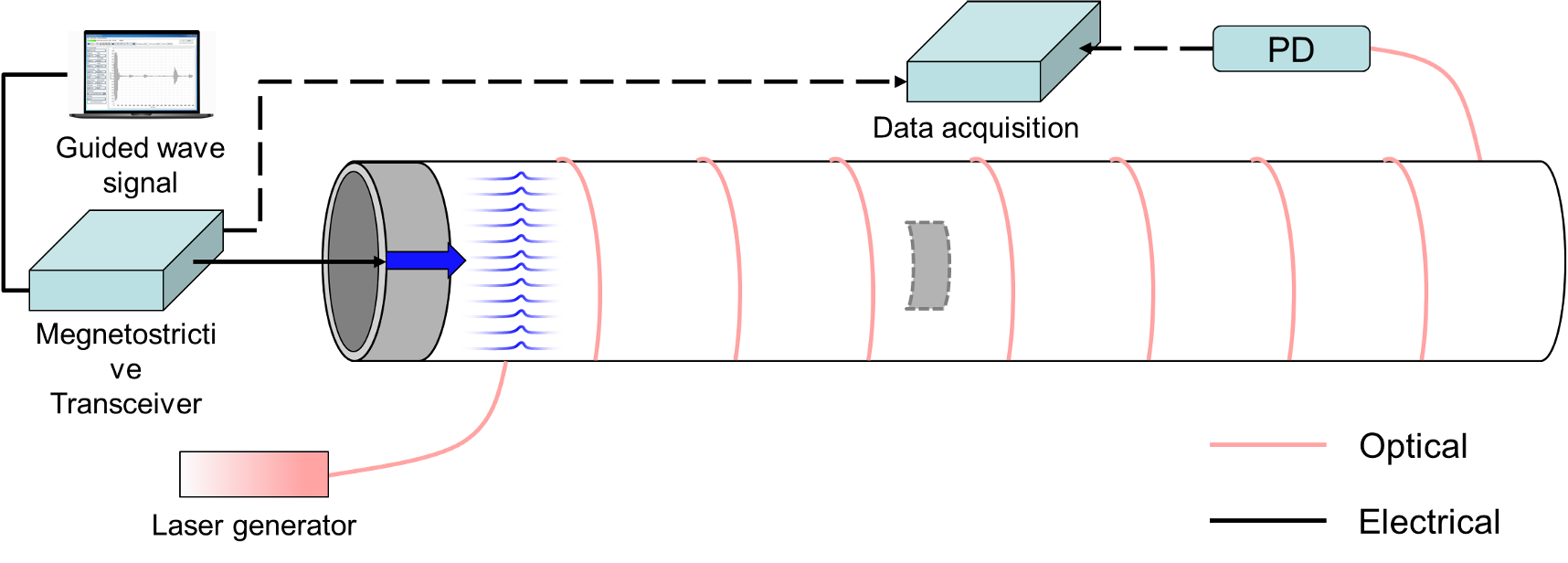
Developed innovative guided wave-based NDT systems with various fiber sensors (FBG, SMS, distributed acoustic) for structural health monitoring with high-precision defect characterization. Implemented tensor-based signal processing algorithms enhancing fiber optic sensing system sensitivity. Proficient in Python, MATLAB, embedded C++, ANSYS, and COMSOL with expertise in FEA, CFD, thermal analysis, and digital twin development. Seeking challenging multidisciplinary projects and collaborative opportunities to advance next generation sensing and monitoring technologies.

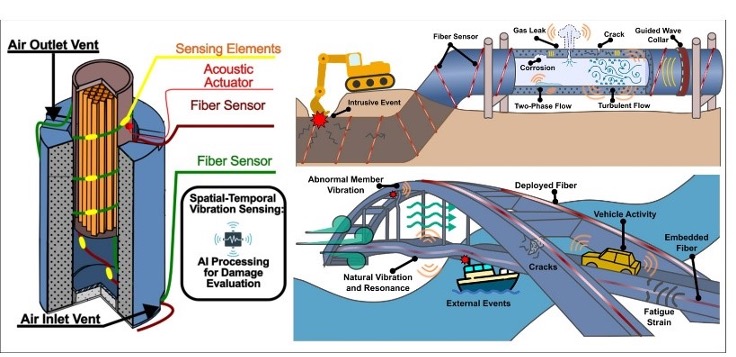
I'm interested in Finite Element Analysis (FEA), thermal analysis, and Computational Fluid Dynamics (CFD), as well as digital twin system development. Most of my research is about inferring the combination of optical fiber sensing and structural-acoustic detection. Some projects are highlighted.
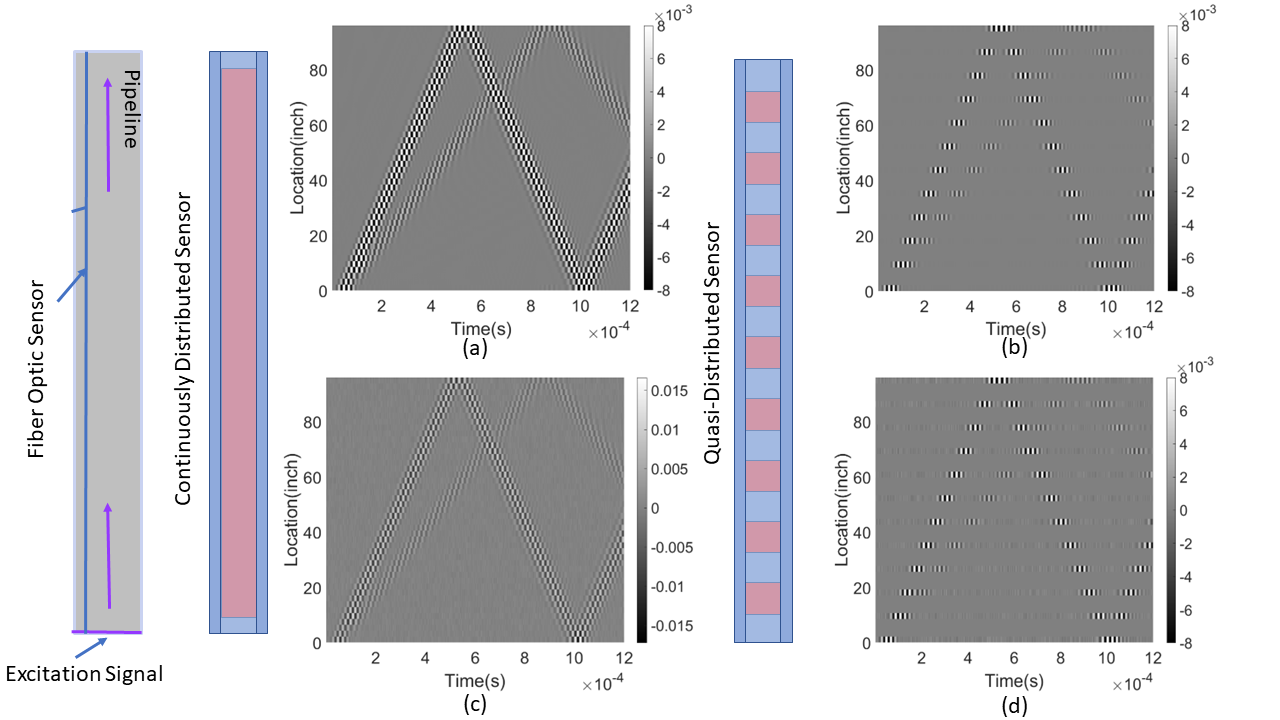
A framework for pipeline damage detection that transforms simulated ultrasonic guided wave data into distributed and quasi-distributed acoustic sensing responses, creating robust datasets for classifying pipeline events while examining sensing system performance under varying noise conditions, as demonstrated in key figures showing signal propagation in time-space plots with and without noise.
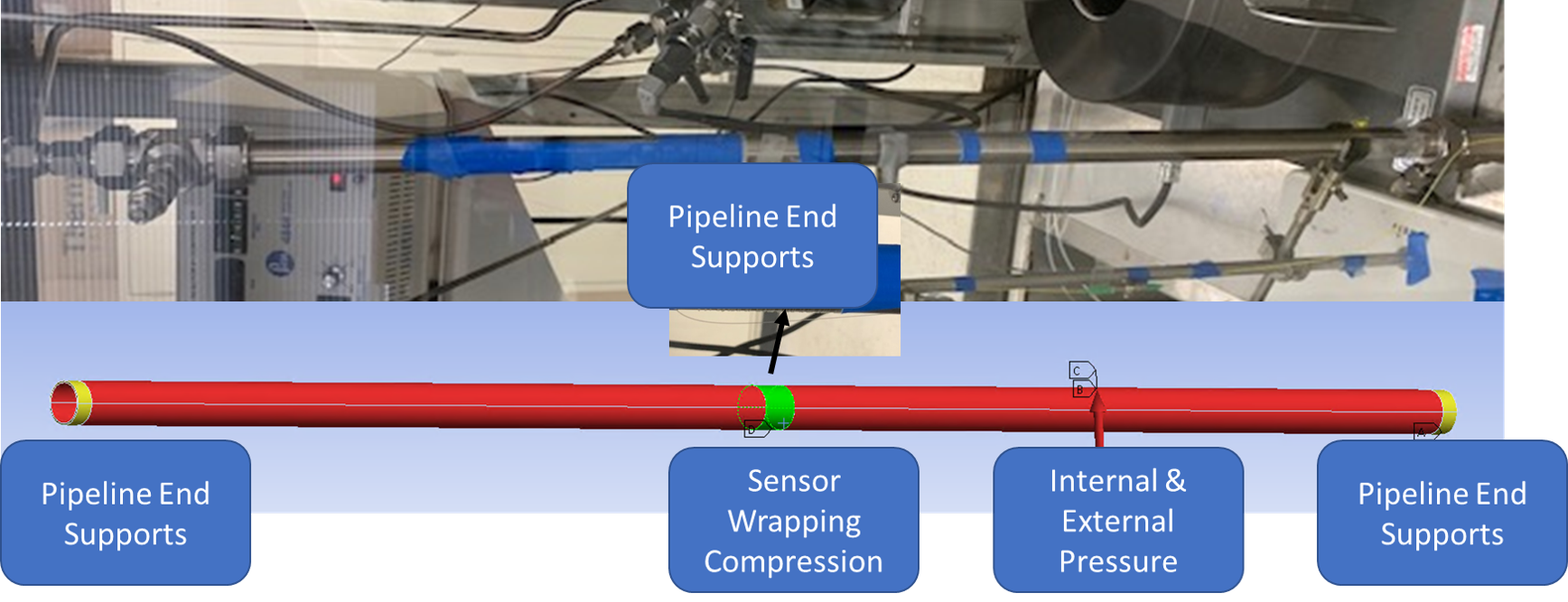
A natural gas pipeline integrity monitoring system using double Brillouin peak sensing fiber with BOTDA technique, demonstrating successful distributed temperature and pressure measurements through laboratory and pilot-scale tests, while implementing a probabilistic deep neural network for rapid analysis and validating results against FEM models.
Novel tensor decomposition algorithms that significantly improve sensitivity and noise rejection in distributed fiber optic sensing systems for structural health monitoring applications.